

The crypto casinos market in 2026 looks unrecognisable next to where it was just a few year ago. Three years of accelerated competition compressed cashout windows, expanded library catalogues, and forced operators to rebuild signup flows around wallets rather than passport scans. British punters now choose from a meaningfully wider menu of credible options than they had two years back.
Our 2026 testing programme ran for fourteen weeks across twenty-six operators. Each platform absorbed six funding cycles spanning £30 to £6,500 in tested withdrawals across BTC, USDT, and ETH chains. The five operators carrying our editorial endorsement earned it through reproducible performance, not landing-page polish or welcome-offer headlines.


$750k World Cup Race + 10% Weekly Cashback + 100% Bonus Up To 1 BTC







Exclusive 400% Match Bonus Up To $10000 + 300 Free Spins






400% Bonus up to $10000 + 300 Free Spins


20% Daily Rakeback + 500 Free Spins



200% Match Bonus Up To 10 ETH + 50 Free Spins











Win Maserati, AP, Rolex + 380% Welcome Bonus & 100 Free Spins | LOW Turnover






Receive €1,000 Bonus & 100 Free Spins



The 2026 rankings below reflect cumulative testing data refreshed against this year’s funding cycles. Three operators climbed from outside last year’s top ten, while two formerly dominant names slid on cashout reliability metrics. The welcome offer arms race continued escalating in headline percentages while quietly tightening on maximum cap fine print.
Composite scoring blended six categories: signup speed, deposit settlement, cashout reliability, support response, bonus clarity, and library quality. Failure inside any single category weighted heavier than a simple average would suggest. The outcome: no operator with inconsistent withdrawal performance reached our top five, regardless of catalogue scale or bonus headline.
| 🏆 Rank | Operator | Defining Strength | Sign Up Reward | Score (/10) |
|---|---|---|---|---|
| 🥇 1 | Mega Dice | Telegram-native gameplay flow | 200% match up to 1 BTC + 50 free spins | 9.7 |
| 🥈 2 | Lucky Block | Multi-chain wallet acceptance | 200% match up to $25,000 | 9.6 |
| 🥉 3 | Bet Ninja | Stealth-first signup architecture | 270% match across three deposits | 9.4 |
| 4 | Bet Panda | Wallet-only signup with weekly cashback | 100% match up to 1 BTC + cashback | 9.3 |
| 5 | BC.Game | 150+ altcoin breadth, provably fair depth | Up to 360% across four deposits | 9.2 |
| 6 | Coin Casino | Casino floor paired with sportsbook | 100% up to 1 BTC + 100 spins | 9.0 |
| 7 | Vave | Streamlined minimalist interface | 100% match up to 1 BTC | 8.8 |
| 8 | Cryptorino | Lightning Network settlement built in | 200% match up to 1 BTC | 8.6 |
| 9 | Bet Play | Daily tournaments and reload triggers | 150% match plus 250 free spins | 8.4 |
| 10 | Wild.io | Quest-driven progression mechanics | 120% match up to 0.05 BTC | 8.2 |
Each review below condenses multi-cycle testing into the operational realities that surface only when real money sits on the table. Brand websites tend to lead with feature lists; our notes lead with what holds up under load and what cracks. Bonus terms, library depth, and cashout claims were verified directly rather than restated from operator marketing copy.
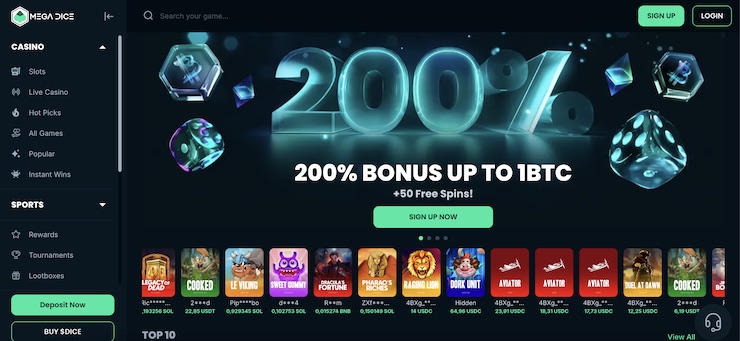
Mega Dice runs on a different operational logic than the rest of this group. Its centre of distinction is Telegram bot integration, which lets players deposit, wager, and withdraw entirely inside the messaging app without ever loading the main site. That architecture removes the most common friction point in any crypto casino flow: switching between wallet, browser, and casino interface.
Catalogue scope reaches roughly 7,000 titles spanning Pragmatic Play, Hacksaw Gaming, Nolimit City, Push Gaming, and Spinomenal. Live dealer streams from Evolution and Pragmatic Play Live cover 140+ tables. The provably fair section runs in-house Dice, Crash, Limbo, and Plinko with cryptographic seed publication after every round.
Welcome architecture sits at 200% match capped at 1 BTC, 40x rollover spread evenly across deposit and bonus, plus 50 free spins on selected Pragmatic Play reels. Funding accepts BTC, ETH, LTC, USDT (both TRC-20 and ERC-20 variants), TRX, SOL, and TON. Average cashout settled in eight minutes across our testing cycles, with no individual withdrawal exceeding twelve minutes during the test window.

Lucky Block built its reputation on cryptocurrency breadth rather than catalogue depth. The platform accepts 30+ tokens directly, with another 200+ accessible through swap mechanics embedded inside the deposit flow itself. That coverage handles practically any wallet a UK player might arrive holding, a flexibility increasingly associated with leading betting sites not on GamStop operating on crypto-first infrastructure.
The catalogue spans roughly 6,500 titles drawing from Pragmatic Play, NetEnt, Hacksaw Gaming, Nolimit City, BGaming, and Relax Gaming. Live dealer infrastructure reaches 175 tables at peak demand, with Evolution, Pragmatic Play Live, and Ezugi all contributing rooms. Sportsbook coverage spans 30+ disciplines with respectable in-play depth on football, basketball, and tennis.
Welcome mechanics combine a 200% match capped at $25,000, 50x rollover applied to bonus only, and a 30-day clearance window. The headline ceiling is genuinely high, though the 50x figure warrants direct comparison against the friendlier 35-40x figures elsewhere in our top five. Cashouts during testing averaged eleven minutes, with USDT on Tron consistently the fastest channel measured.
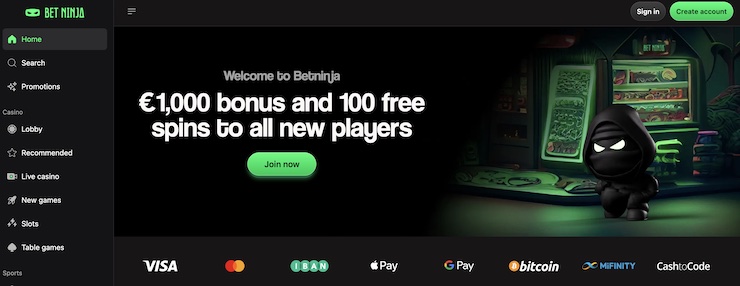
Bet Ninja launched into the no kyc crypto casinos space with a clear positioning bet: zero compromise on anonymity, paired with a welcome structure stretched across three sequential deposits. That structural choice signals an operator targeting players who prioritise privacy over headline simplicity. The trade-off works cleanly for the audience it serves.
Library scope hits roughly 5,400 titles from Pragmatic Play, BGaming, Hacksaw Gaming, Nolimit City, Push Gaming, and Print Studios. Live dealer streams cover 150+ tables through Evolution and Pragmatic Play Live. The provably fair section runs Crash, Dice, Mines, and Plinko using publishable hashes verifiable on independent tools.
Welcome architecture totals 270% spread across three deposits, with 40x rollover applied to bonus only and a 45-day clearance window. Funding works through BTC, ETH, LTC, USDT in TRC-20 and ERC-20 variants, BNB, DOGE, and SOL. Cashout averages hit seven minutes during testing, placing Bet Ninja among the faster no kyc withdrawal casinos operating at this scale.
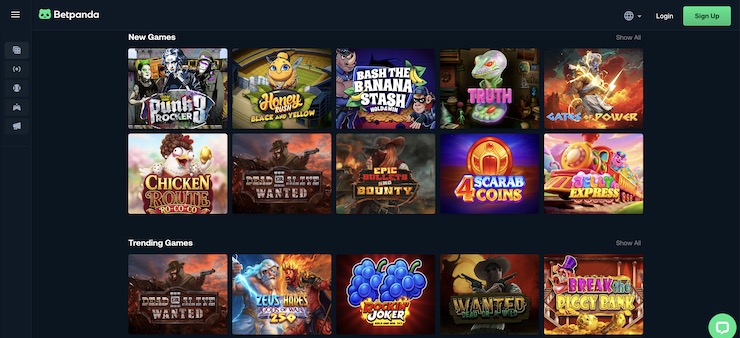
Bet Panda’s headline feature is wallet-only signup, but the mechanic genuinely separating the platform is its cashback engine. The operator returns 25% of weekly net losses every Monday morning with zero wagering attached, which reshapes the mathematics of any extended session. No rival in this review group matches that combination of generosity and structural simplicity.
The catalogue holds roughly 6,200 titles weighted toward Pragmatic Play, BGaming, Hacksaw Gaming, and Nolimit City. Live dealer infrastructure spans 180 tables through Evolution and Pragmatic Play Live. Sportsbook coverage extends across 34 disciplines with respectable in-play markets on football, tennis, and MMA fixtures, placing the platform alongside leading crypto sports betting sites combining casino and sportsbook activity under one crypto wallet system.
Welcome architecture sits at 100% match capped at 1 BTC, 35x rollover on bonus only, and a 30-day clearance window. Funding works through BTC, ETH, LTC, USDT (both chain variants), TRX, and SOL. Six tested cashouts settled inside nine minutes each across three different tokens used.
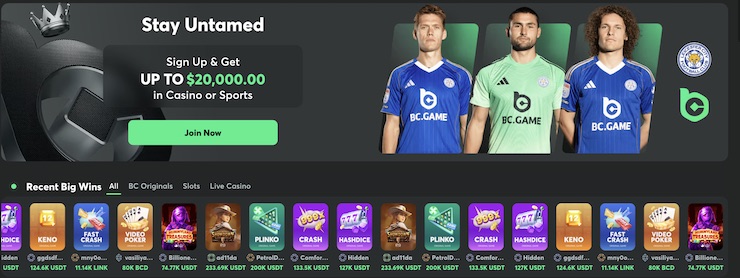
BC.Game’s centre of mass in 2026 still sits where the platform built its reputation: provably fair gaming. The in-house catalogue covering Crash, Plinko, Dice, Limbo, Mines, and Hash all runs on publishable cryptographic seeds that players can audit per round. That auditability separates BC.Game from operators whose provably fair section consists only of third-party imports.
The wider library exceeds 10,000 titles drawn from roughly 90 studios. External slots and table games from Pragmatic Play, NetEnt, Hacksaw Gaming, and BGaming populate the standard categories alongside live dealer rooms from Evolution and Pragmatic Play Live. Catalogue scale is genuinely the largest in this review group.
Welcome architecture spreads 360% across four sequential deposits, though the 60x rollover figure remains the harshest in this group by a meaningful margin. Curaçao licensing held continuously since 2017 gives BC.Game the longest unbroken track record among our five reviewed operators. Cashouts averaged fourteen minutes during testing cycles.
Composite rankings tell you the order; granular comparison surfaces the trade-offs each operator absorbed to reach its specific strengths. The table below isolates seven measurable indicators across our five reviewed brands. Reading down the columns reveals where each platform invested testing energy.
| ⚙️ Performance Indicator | Mega Dice | Lucky Block | Bet Ninja | Bet Panda | BC.Game |
|---|---|---|---|---|---|
| ⏱️ Signup Duration | 20 sec | 45 sec | 12 sec | 15 sec | 50 sec |
| 💷 Lowest Deposit (GBP) | £8 | £8 | £6 | £4 | £1 |
| ⚡ Cashout Average | 8 min | 11 min | 7 min | 9 min | 14 min |
| 💬 Live Chat Response | 2 min | 3 min | 4 min | 2 min | 3 min |
| 🔐 Provably Fair Range | Strong | Moderate | Strong | Solid | Extensive |
| 🪙 Token Acceptance | 25+ | 30+ direct | 18+ | 12+ | 150+ |
| 📱 Mobile Experience | Excellent | Strong | Strong | Excellent | Strong |
British gambling law splits cleanly along a single line: regulation applies to the operator running the service, not to the resident placing the wager. That structural choice is what creates legitimate space for offshore platforms to serve UK punters without putting those punters in legal jeopardy. The Gambling Act 2005 and its 2014 amendments locate enforcement firmly on the supply side.
The legislation mirrors how Britain treats imported pharmaceuticals or unlicensed financial advisory services. The supplier carries the regulatory burden; the consumer remains free to select between licensed and unlicensed channels. UKGC obligations therefore bind British-licensed operators specifically and do not reach players choosing alternative jurisdictions.
The genuine consequence of using offshore platforms sits downstream of any payout dispute. UKGC complaint pathways, ADR services, and consumer protection guarantees attach to operators holding a UK licence specifically. An offshore disagreement leaves the player working directly with the operator and the wider crypto community without British regulatory escalation available.
KYC translates from acronym into something concrete every UKGC user has personally experienced: the document upload sequence at signup. Passport scan, recent utility bill, occasionally a bank statement, and increasingly a source-of-funds questionnaire arriving without prior warning. That sequence defines KYC in player-experience terms, whatever the regulatory theory claims about its purpose.
The regulatory theory traces back to financial sector anti-fraud architecture predating online gambling by several decades. Anti-money-laundering protocols, age-verification requirements, and identity-confirmation duties got grafted onto the gambling industry when it migrated online in the early 2000s. UKGC enforcement now requires that entire stack before any first cashout, and frequently before deposit funds even credit fully.
Offshore operators sit outside UKGC jurisdiction and consequently outside its KYC mandates entirely. Their licensing frameworks require AML compliance at the operator level without imposing per-player verification at signup. Functioning as no id verification casinos is therefore a permitted policy choice rather than a regulatory loophole being exploited.
Three independent actors can flip an account into manual review even on platforms advertising zero upfront verification. Operator risk algorithms, operator AML compliance teams, and external counterparties such as banks and blockchain analytics firms each carry their own trigger logic. None of them are visible to the player until they fire.
Algorithmic triggers activate when cashouts exceed internal ceilings, accounts show mismatched IP, VPN, or timezone signals, or play patterns match known fraud profiles. AML triggers fire on regulator-mandated random sampling, jurisdiction changes during play, and specific transaction-size thresholds. External triggers fire when withdrawals reach regulated exchanges that freeze inbound funds pending operator confirmation.
Players running standard deposit and cashout sizes rarely encounter any of these touchpoints in practice. The operator’s “no KYC” promise covers the upfront flow specifically rather than guaranteeing zero verification across the entire account lifecycle.
Compliance teams request documents matching the AML categories they need to satisfy at that moment. Identity verification calls for government-issued photo ID, typically passport or driving licence. Address verification calls for a utility bill or bank statement dated inside the past three months.
Source-of-funds verification is rare but possible on outsized cashouts. The operator may request wallet transaction history or an exchange statement showing where the original deposit originated. The requested document set matches what UKGC operators routinely demand at signup; the distinction lies in timing and frequency, not document scope itself.
The features-list approach to vetting an operator obscures the platforms that look excellent on paper but disappoint in practice. A better framework focuses on five operational checkpoints where weaker operators reveal themselves under pressure. Each checkpoint catches a distinct category of underperformance.
The strongest operators clear signup inside 60 seconds with email plus password, or 15 seconds with a wallet signature alone. Warning signs include mandatory phone verification, complex captchas, or geo-blocks that appear only after account creation completes. The best no kyc crypto casinos broadcast their stance directly at the registration screen itself.
Strong operators credit balances the moment the first blockchain confirmation lands. Weak operators introduce “pending review” status on first deposits, frequently paired with bonus terms that expire while the review processes. Test with a small deposit before committing meaningful funds to any new platform.
The genre divides hardest at first withdrawal. Operators sending the first cashout inside fifteen minutes typically remain reliable across the wider relationship. Operators inventing “KYC for security” requirements on first withdrawals after advertising zero verification are showing exactly the pattern worth walking away from.
This is the hidden tell. Some platforms tighten verification, slow approvals, or fabricate bonus-abuse claims after a player books significant wins. A platform processing a £400 cashout in eight minutes but stalling a £4,000 cashout for three days under “enhanced review” is broadcasting its philosophy openly.
Live chat should respond inside five minutes during normal hours, with a clear path to email or community moderators for issues exceeding first-line scope. Operators where every problem routes through a single overworked agent producing copy-paste responses are the warning sign worth heeding immediately. Quality support telegraphs operator priorities better than any marketing page does.
Experienced punters develop pattern recognition for operators that present well on the homepage but collapse under scrutiny. The investigation routine takes roughly three minutes per platform and surfaces nearly every category of bad actor before deposit funds change hands. Four checks consistently flag the operators worth avoiding outright.
Legitimate operators publish a clickable licence number leading directly to the regulator’s verification page. Static badge images, missing licence numbers, or hyperlinks redirecting to the operator’s own marketing pages disqualify the operator immediately. The check takes thirty seconds and prevents most of the worst outcomes.
Read the bonus terms before claiming anything offered upfront. Maximum bet limits during rollover, maximum cashout caps on bonus winnings, and game weighting tables all reveal what the operator expects from the bonus economically. The terms tell you whether the offer carries positive expected value or operates purely as marketing theatre.
Telegram, Discord, X, and Reddit channels for crypto gambling carry real-time complaint patterns. Look for clusters around delayed cashouts, manufactured AML reviews, or sudden bonus term changes rather than isolated individual grumbles. Clusters indicate systemic operator issues; one-off complaints typically indicate individual disputes.
Independent platforms such as AskGamblers and CasinoMeister track complaint volumes and resolution rates per operator. A site with twenty unresolved complaints inside twelve months carries a pattern worth taking seriously regardless of marketing polish. Two minutes of cross-checking saves substantially more pain later.
Offshore licensing exists because two different regulatory philosophies coexist inside the global gambling market. Britain selected protective consumer-side regulation built around mandatory KYC, affordability checks, and self-exclusion infrastructure. Curaçao, Anjouan, Costa Rica, and Kahnawake selected operator-side regulation focused on fairness audits and basic AML compliance without consumer-side verification mandates. Neither philosophy is objectively superior to the other. Each answers the same underlying question differently: how much consumer protection should be priced into the gambling industry’s structural costs. The UK model produces higher consumer protection and slower operational tempo; the offshore model produces faster operations and lower consumer protection, which is one of the main reasons players continue moving toward non GamStop casinos operating outside the UKGC framework. Most new crypto casinos targeting British residents in 2026 operate under Curaçao licences. The Curaçao framework has been active since 1996, making it the longest-established offshore option available. The regulator audits RNG fairness, requires segregated fund accounts, mandates SSL encryption, and enforces operator-level AML compliance. Offshore frameworks require periodic RNG audits, segregated player fund accounts protecting balances against operator insolvency, SSL-encrypted data transmission, AML enforcement at the operator level, and responsible gambling tool availability. Compliance audits typically operate on multi-year cycles rather than the continuous oversight UKGC applies. The framework establishes minimum standards rather than maximum consumer protection. Five missing elements distinguish offshore frameworks from UKGC oversight: no mandatory identity verification at signup, no individual affordability assessment, no GamStop integration, no UK-specific advertising compliance, and no consumer-side dispute adjudication body. Those gaps are precisely what enable the speed and privacy advantages offshore platforms can offer. The same gaps also create the trade-offs UK players need to weigh deliberately. Cashout speed claims obscure where withdrawal time actually accumulates. Two distinct contributors determine total time: operator-controlled decisions and network-controlled confirmations. Different operators and different chains optimise each contributor differently, which is why headline “instant withdrawal” marketing can mask twelve-hour realities in practice. Operator-controlled time covers approval logic. Risk algorithms scan each request against fraud heuristics, AML thresholds, and bonus-abuse patterns. The strongest operators in our 2026 test cycle auto-approved standard cashouts inside ten minutes; weaker operators queued requests manually for hours or days. Network-controlled time covers broadcast and confirmation depth. Broadcasting itself takes seconds once approval clears; the variable is confirmation count. Bitcoin requires three to six confirmations for safe receipt (15 to 60 minutes), Ethereum about twelve confirmations (1 to 3 minutes), and USDT on Tron roughly twenty with each landing sub-second. The practical conclusion: chain selection matters most for the confirmation stage. Lightning Network and Tron stablecoins dominate speed rankings because they compress confirmation into near-instant settlement. Operators dominating through aggressive auto-approval lead on every chain, and the top bitcoin casinos in 2026 optimise both dimensions simultaneously. Reputable operators compensate for the absence of UKGC consumer protection by layering technical defences across their architecture. Each defence answers a specific threat in the operator’s risk model. Evaluating security posture means checking whether the stack genuinely addresses real threats or simply checks marketing boxes for show. Threat: interception during signup, login, and play sessions. Defence: 256-bit SSL/TLS encryption applied across every page touching account or transaction data. This functions as table-stakes now, and any operator failing here disqualifies themselves immediately on first inspection. Threat: account compromise through stolen passwords or hijacked sessions. Defence: two-factor authentication through Google Authenticator, Authy, or comparable TOTP applications. Activating 2FA is the single highest-impact security action available to any player at any reviewed operator. Threat: platform-side compromise of customer crypto holdings. Defence: cold storage for the bulk of treasury balances offline. Reputable operators keep only daily operational liquidity in hot wallets, with the rest air-gapped from network access entirely. Threat: results manipulated server-side without player visibility into the process. Defence: provably fair architecture publishing a cryptographic hash before each round runs, then revealing the seed after the round settles. BC.Game integrates this across in-house titles, while third-party slots rely on independent RNG audits performed at the studio level instead. Threat: operator misbehaviour without consequence. Defence: active community presence and visible regulatory accountability supplementing formal licensing. Bitcoin casinos UK punters trust maintain visible Telegram, Discord, and X channels where issues surface within hours rather than disappearing into ticketing voids never to return. Bonus categories aren’t randomly designed. Each targets a specific player behaviour the operator wants to incentivise or retain, and reading the small print accurately begins with understanding that intent. Five categories cover the structures players will encounter at any reviewed operator across the genre. Welcome offers exist to convert curious visitors into depositing accounts. The headline percentage gets calibrated against the rollover figure so the operator still earns a house edge on average from the bonus claim itself. A 200% match attached to 40x rollover is calibrated differently from a 100% match attached to 35x. Mega Dice runs a 200%/40x structure with 50 free spins layered in. BC.Game’s 360% spread across four deposits attaches the harshest 60x figure in this group. Bet Panda’s clean 100%/35x sits at the friendliest end of the welcome bonus spectrum among reviewed brands. Reload offers exist to keep depositing accounts depositing repeatedly. Headline percentages run smaller than welcome figures, typically 30-50%, though cumulative value across weeks can exceed the original welcome package total. Bet Play attaches daily reload triggers to specific featured games, while BC.Game uses a daily wheel mechanic randomising reload values per spin. Cashback addresses player behaviour around heavy losses specifically. Returning a percentage of net losses reduces the emotional weight of losing sessions and retains the player on platform. Bet Panda’s 25% weekly cashback delivered with zero wagering attached is the most generous mechanic in this review group, closer mathematically to a true rebate than to a marketing offer. VIP schemes target players generating volume regardless of incentives and convert that volume into structural retention. BC.Game’s 100+ tier ladder rewards continuous activity with escalating perks at each step. Coin Casino’s invitation-only VIP delivers personal account managers, raised cashout caps, and bespoke promotional offers. Free spins and prize-drop tournaments function as cross-promotional vehicles between studios and operators. Studios push new releases through free-spin packages while operators get publicity attached to slot launch windows. Maximum win caps on free spin promotions, frequently £100 or less, deserve direct attention before claiming since they can quietly neutralise outsized hits on volatile titles. Account opening at any reviewed operator wraps inside roughly ten minutes from landing page to first wager. Each stage involves a decision worth making deliberately rather than defaulting through on autopilot. The decisions cluster around five concrete choices. The choice that matters most isn’t the welcome offer headline at all. Cashout reliability, library depth, and support quality persist across the entire account lifetime; welcome bonuses pay out only once. Weighting persistent quality above one-time incentives produces better outcomes across multiple operators tested. The single highest-impact action at this stage is activating two-factor authentication before depositing anything. Accounts get targeted most aggressively during the first 48 hours after creation. Setting up 2FA after a security incident is meaningfully harder than setting it up before any incident occurs. Chain selection should follow economics rather than habit or familiarity. USDT on Tron is faster and cheaper than Bitcoin for amounts under $1,000, while Lightning Network outperforms both for amounts under $100. The chain that worked best last year may not be optimal for your current usage patterns. Bonuses don’t activate uniformly across operators. Some require a toggle clicked before depositing, others require a promo code entered, others apply automatically once the deposit confirms. Confirm the activation pathway before sending any funds since most operators won’t retroactively apply a missed bonus. Game weighting affects which categories count fully toward rollover clearance. Slots typically count 100%, table games often count 10-20%, and sportsbook stakes sometimes count zero. Verify the weighting table inside bonus terms before placing the first bet, particularly if you favour table games or live dealer rooms over slot reels. Cryptocurrency dominates funding across reviewed operators, but layered fiat on-ramps exist for players who haven’t acquired tokens directly yet. Each option represents a different speed, fee, and convenience trade-off worth weighing on its own merits. The best no kyc bitcoin casinos typically support at least four of the channels below. Direct crypto funding ranks fastest and cheapest once you hold tokens already. Bitcoin, Ethereum, Litecoin, and Tether enjoy universal acceptance across reviewed brands. Dogecoin, Ripple, Tron, BNB, Solana, and Cardano appear on most operators, with BC.Game extending to 150+ tokens including obscure altcoins. Visa and Mastercard funding routes through MoonPay, Changelly, or Banxa converts fiat into crypto inside the casino’s deposit interface itself. Service fees run 2-5% above prevailing exchange rates. UK bank policies frequently decline these transactions on the issuing side rather than the casino’s, so treat declined cards as a bank-side issue and not an operator failure. Mobile wallet payments route through the same on-ramp processors as card transactions but follow different bank-side approval patterns. Fees typically run 2-4% above market exchange rates. Convenience favours smaller deposits where percentage fees remain acceptable in absolute terms. Direct bank transfer appears on only a small subset of operators in this market. Clearance windows stretch to 1-3 working days, defeating much of the crypto-settlement appeal. The route exists primarily for high-volume players preferring fiat-denominated bankrolls over cryptocurrency exposure. The migration from UKGC operators to crypto-native alternatives accumulated through four specific frustrations between 2020 and 2026. Each frustration corresponded to a particular UKGC regulatory tightening that crypto casinos could simply ignore by operating outside that jurisdiction. Together they explain why offshore options expanded from fringe to mainstream within six years. The affordability check backlash arrived first, peaking through 2020 to 2022. Intrusive financial questionnaires triggered the first significant wave of British players exploring offshore alternatives. The intrusiveness drove the migration initially, not the speed or bonus scale that followed later. The cashout-delay tipping point came next, between 2022 and 2023. Two-to-five-day withdrawal windows at UKGC operators became indefensible as crypto-native alternatives demonstrated 15-minute settlements consistently. The speed gap accelerated the migration meaningfully across all player segments. The bonus-cap divergence emerged through 2023 to 2024. UKGC marketing restrictions tightened while offshore operators kept escalating welcome offers into multi-BTC territory. The bonus value gap became too large to dismiss as marketing inflation alone. The technical-feature lead solidified through 2024 to 2026. Provably fair gaming, blockchain transaction verification, and Lightning Network settlement added capabilities UKGC operators couldn’t legally implement without rebuilding their compliance stacks from scratch. Players valuing those features lost their regulated-alternative option entirely. The cumulative outcome: online casinos no kyc now deliver a meaningfully different product, not merely a less-regulated version of UKGC services. Real trade-offs persist (no GamStop, narrower fiat support, limited dispute recourse), but the value proposition has stabilised into a coherent alternative rather than a workaround. Offshore platform trade-offs fall into three distinct categories worth keeping separate when weighing risk. Recognising which category any concern belongs to determines whether action can address it or whether you simply have to accept it. The three categories operate at different levels of player control. Self-neutralisable risks include cryptocurrency price volatility (resolved by playing in stablecoin balances), operator collapse exposure (reduced through frequent withdrawals rather than parked balances), and bad-actor selection (reduced through community vetting before any deposit clears). Applying basic discipline neutralises most of the practical danger in these three categories, particularly when using established betting sites not on GamStop with verified payout histories and active player communities. Structural risks operate at the regulatory architecture level and cannot be removed through individual action. UKGC dispute machinery, ADR services, and consumer-protection guarantees do not extend to offshore operators, full stop. No British regulator will adjudicate payout disputes with Curaçao-licensed platforms regardless of underlying merits. GBP-native funding stays narrow across most offshore platforms compared to UKGC alternatives. Most deposits require crypto conversion somewhere in the flow, which adds friction and fees UKGC operators don’t impose. The convenience cost is real but generally manageable for players willing to learn one or two on-ramp services. Segment-specific risks weigh heaviest on particular player groups. GamStop self-exclusion does not exist at offshore platforms, removing a critical harm-reduction tool for players actively recovering from gambling-related issues. The responsible gambling section below treats this consideration with appropriate seriousness rather than as casual mention. The trade-offs surface most clearly in head-to-head comparison format. The breakdown below isolates differences that genuinely affect day-to-day experience rather than marketing-deck talking points. Neither column wins universally, and the right choice depends on which differences matter most to your personal usage patterns. UKGC platforms suit players prioritising consumer protection and structured harm-reduction infrastructure. Crypto-native operators suit players valuing speed, privacy, bonus scale, and technical features, who are willing to manage their own exposure consciously rather than rely on regulatory backstops. The tactics that genuinely improve outcomes cluster around five lifecycle moments. Each moment carries decisions worth making deliberately rather than defaulting through. Treating each moment as a checkpoint produces better results than treating the whole session as one uninterrupted block. Before signup, due diligence determines downstream exposure. Three minutes of investigation into licence, community presence, and complaint history protects against operators that shouldn’t have entered the market in the first place. Spreading exposure across two or three vetted anonymous crypto casinos rather than concentrating on one materially reduces single-platform collapse risk. During onboarding, security architecture comes first. Activate two-factor authentication on the casino account, the email used for registration, and the wallet funding the account before depositing any meaningful sum. Targeting hits hardest during the first 48 hours after account creation, so the security layer must be live before that window opens. During play, stablecoin discipline preserves bankroll value. Tether and USD Coin maintain 1:1 USD pegs, meaning balances stay stable regardless of overnight market swings. Bonus claims warrant arithmetic discipline too: calculate total wagering exposure in your deposit currency before opting in. Around withdrawals, chain selection determines net proceeds. USDT on Tron settles inside 90 seconds with sub-$1 fees, while Bitcoin during congested periods can charge $20 on small withdrawals. Match the chain to amount and current network conditions rather than defaulting to habit. When stepping back, pre-commitment matters most. The frictionless nature of crypto deposits makes reload-after-loss particularly hazardous behaviour. Configure deposit limits inside the platform’s responsible gambling controls and treat them as hard ceilings. UK tax treatment also deserves attention before withdrawal volumes scale meaningfully. Gambling winnings themselves sit outside HMRC income tax assessment, though cryptocurrency appreciation between receipt and disposal can fall within Capital Gains Tax. The annual CGT exempt amount and disposal calculation rules vary by individual circumstance, making personalised accountancy advice worthwhile above modest annual thresholds. Crypto casinos accelerate every dimension of online gambling, including the patterns leading to harm. The frictionless deposit removes the unintentional cooling-off mechanism traditional payment infrastructure provided passively through clearance delays. Self-imposed friction now has to replace what payment systems previously delivered without conscious effort. Every reputable operator in this review group ships responsible gambling controls inside account settings. Deposit limits across daily, weekly, and monthly windows, plus loss caps, session reminders, and cooling-off periods, all sit one or two clicks deep. Configuring these before the first deposit is dramatically more effective than configuring them after a difficult session. Three independent organisations offer free confidential support for British players. GamCare operates a 24-hour helpline and live chat at gamcare.org.uk. BeGambleAware at begambleaware.org connects players with local treatment services and self-help tools, while Gambling Therapy at gamblingtherapy.org delivers an online programme covering practical interventions and emotional support with multilingual access. The behavioural signals worth recognising: losses migrating from budgeted entertainment expense into chased recovery, sessions extending beyond pre-set time limits, and funds for gambling drawn from sources earmarked for other obligations. Any of those three signals warrants stepping back regardless of how the previous session ended. The 2026 landscape gives British punters a genuinely different product category alongside UKGC operators rather than a less-regulated workaround. Each of the five reviewed brands maps cleanly to a specific player profile. Choosing among the leading no kyc crypto casinos starts with identifying which profile best describes your actual usage. For Telegram-integrated players: Mega Dice. The bot-driven deposit and play flow eliminates navigation friction entirely, making the platform the natural choice for players already running Telegram throughout their day. For multi-chain wallet holders: Lucky Block. Direct acceptance of 30+ tokens plus integrated swap routes for 200+ more handles practically any wallet a UK player might bring to the casino. For privacy-maximalist players: Bet Ninja. The zero-email signup paired with seven-minute average cashouts and a 45-day clearance window suits players prioritising anonymity without sacrificing operational speed. For cashback-focused players: Bet Panda. The 25% weekly cashback delivered without any rollover obligation reshapes session economics in ways no rival currently matches structurally. For altcoin-portfolio players: BC.Game. 150+ token acceptance, provably fair in-house games with auditable cryptographic seeds, and continuous Curaçao operation since 2017 make the platform the natural fit for diversified crypto holdings.
Curaçao licence numbers should be clickable on legitimate operators and should resolve to the regulator’s verification portal at gaminglicences.com. Static images leading nowhere, or licence numbers that fail under direct lookup, indicate an operator running without genuine oversight. Two minutes spent verifying saves significantly more time later if disputes arise.How Offshore Licensing Underpins Online Casinos Without KYC
Standard Compliance Obligations Offshore
Where Offshore Oversight Falls Short
Withdrawal Speed Benchmarks Across Top Bitcoin Casinos
Bitcoin remains the right choice for holders sitting on long-term positions or large treasury balances. For everyday deposit-and-withdraw cycles, USDT on Tron has emerged as the practical default across new bitcoin casinos in 2026. Fees stay around $1 regardless of amount, settlement lands in 60 to 90 seconds, and the stablecoin peg eliminates overnight volatility from your bankroll calculations entirely.Security Architecture at the Best Bitcoin Casinos in 2026
Data Protection in Transit
Account Defence Against Credential Theft
Treasury Defence Against Operator Breach
Outcome Verification at the Game Level
Operator Accountability Through Visibility
Bonus Structures Explained at the Best No KYC Casinos
The Welcome Match
Reload Promotions for Returning Deposits
Cashback for Loss Recovery
VIP and Loyalty Programmes
Free Spin and Drop Campaigns
A 200% match looks attractive until wagering math enters the calculation. A £100 deposit with a £200 bonus and 40x rollover produces £12,000 of mandatory turnover before any withdrawal is possible. Slot RTPs around 96% imply roughly £480 in expected losses to clear that turnover, so some offers carry positive expected value after the math but many don’t.Step by Step Registration at Online Casinos No ID Needed
Operator Selection
Account Creation
Deposit Funding Choice
Bonus Activation Path
First Wager Choice
Funding and Cashout Options at Crypto Casinos No KYC
Direct Cryptocurrency Transfer
Card Funding via Integrated Processors
Apple Pay and Google Pay
Bank Transfer (Limited Coverage)
💳 Payment Channel
Lowest Top Up
Cost per Transfer
Crediting Window
Operator Availability
Bitcoin (on-chain)
$10
Network only
10-60 min
All operators
Lightning Network
$1
Negligible
Under 30 sec
Selected sites
Ethereum (ERC-20)
$20
Gas variable
1-3 min
All operators
USDT on Tron
$5
Around $1
Under 90 sec
All operators
Solana (SOL)
$5
Negligible
Under 60 sec
Most sites
Visa / Mastercard
$20
2-5% markup
Instant
Selected sites
Apple / Google Pay
$20
2-4% markup
Instant
Selected sites
Bank Transfer
$50
None typical
1-3 days
Rare
The Forces Driving UK Players to Casinos Bitcoin Operators
Trade Offs at No Verification Casinos UK Players Need to Understand
Crypto Casinos vs UKGC Sites: A Practical Comparison
📊 Decision Factor
Crypto-Native Operators
UKGC-Licensed Brands
Edge Goes To
🪪 Identity Disclosure
Email or wallet signature
Full passport upload
Crypto
⚡ Cashout Window
5-20 minutes
1-5 working days
Crypto
🎁 Welcome Bonus Ceiling
Up to 360% / multi-BTC
£10 to £50 standard
Crypto
⚖️ Dispute Resolution
Operator support only
UKGC plus ADR pathways
UKGC
🚫 GamStop Integration
Not available
Mandatory inclusion
UKGC
🔐 Provably Fair Titles
Widely available
Not offered
Crypto
📱 Native Mobile App
Uncommon
Standard offering
UKGC
💷 GBP Direct Rails
Conversion route required
Native acceptance
UKGC
💰 Affordability Checks
None applied
Mandatory above threshold
Player preference
🎰 Library Volume
5,000 to 10,000+
Typically 2,000-5,000
Crypto
Session Strategies That Improve Outcomes at No KYC Online Casinos
Responsible Gambling Tools and Support for UK Punters
Most operators enforce 24-48 hour delays on raising deposit limits, providing exactly the friction your future self will benefit from when a session goes sideways. Setting caps after a difficult session is meaningfully harder than setting them at signup, and the deliberate inconvenience is the entire design intent of the feature.Closing Verdict on the Best Crypto Casinos No KYC in 2026
Common Questions About No KYC Crypto Casinos Answered
Are minutes-to-cashout claims accurate or marketing copy?
Is there a meaningful deposit floor?
Why do UK banks decline direct deposits to offshore operators?
Can I open accounts at several no id casinos simultaneously?
What protection exists if an offshore operator collapses?
Do crypto gambling winnings trigger UK tax?
How do I verify a game outcome is actually random?